

Practical Publishing Considerations for Aspiring Composers
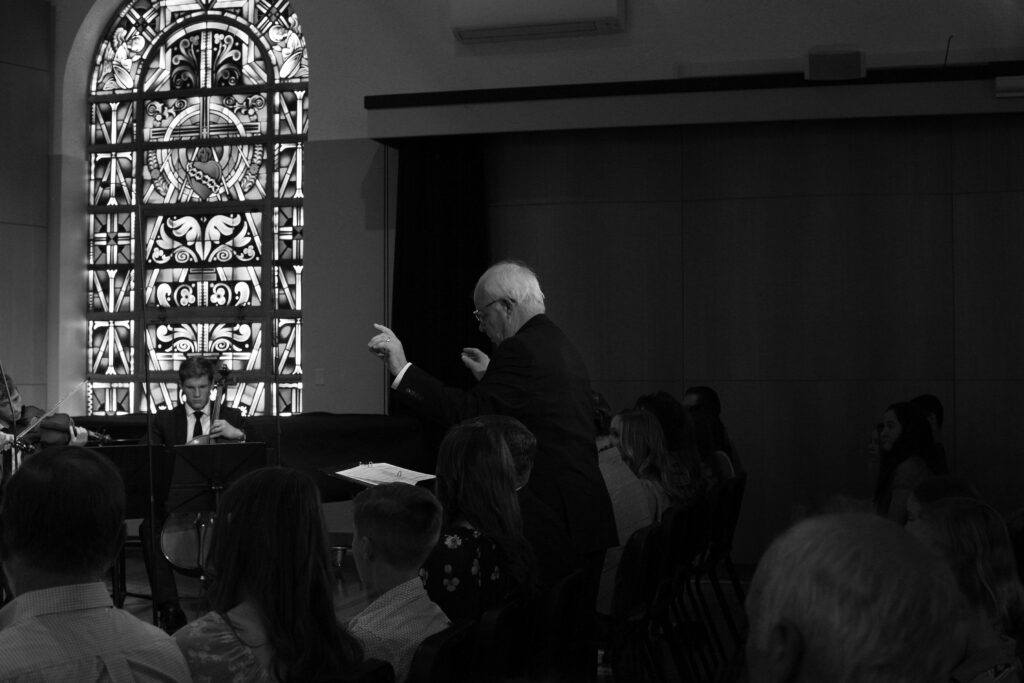
Navigating the publishing market can be challenging, particularly for those unsure about what to expect. Professional guidance can provide valuable insight and help composers avoid common pitfalls. Dr. David Ledgerwood, former chair of Maranatha’s Department of Music, is an exceptional teacher, conductor, and performer. A prolific arranger with more than fifty published works to his credit, he is distinctively qualified to offer sage advice for those preparing music for publication.
When asked about his thoughts on publishing as a young composer, Dr. Ledgerwood offered many valuable considerations. The publishing market can be challenging when one is unsure of what to expect, and he provided valuable insight on how to approach the publishing process.
Ledgerwood says, “Before getting started, I suggest a thorough and honest consideration of the following points:
Motivation: Why do you want to publish? Is it for financial gain? Is it for notoriety? Do you view it as a stamp of approval on your work? Financially, standard publishing royalties are 10% on copies sold. You can do the math. Notoriety—yes—if musicians see that you are published, they may be more likely to commission you to write something for them. The best income is in commissions. [If for] stamp of approval—in the business, certain publishers are considered more selective than others. The stamp of approval varies based on who accepted it for publication. The lowest stamp is self-publishing unless you are very skilled.
Market: Is what you are writing in line with what people are willing to purchase? Do your musical ideas represent a fresh approach, or are they a copy of what everyone else is writing?
Craft: Is your writing style, craft, and layout up to a professional level? Do your copies look professional? Are they free from musical, theoretical, notational, and textual errors? Publishers receive so many submissions that if a piece does not look professional, they will go on to the next one. If they see too many errors, they will not give it a second look.
Performance: Who is performing your work? Do you have reputable groups or individuals programming your work? He continues with a tip from composer Brian Buda, who “likened publishing to three concentric circles. One circle represents commission, another represents market, and the third represents artistic vision. When you are able to produce artistic works that people will commission and that the public will purchase, that is the ‘sweet spot’.”
Ledgerwood shares practical pointers for musicians who want to build a successful publishing portfolio:
“Develop your craft. Craft is developed over a lifetime. Learn music theory inside and out. Read about the creative endeavors of all types of artists. Develop a quote library. Listen continually. Ask for advice from professionals. Write, edit, write, edit, and write more, learning to apply an increasingly critical eye to your work.
When studying the market, be aware that certain areas are already saturated. There is always room for quality work, but certain markets are flooded. Something must truly stand out to sell. Lorenz is publishing more piano music and is not accepting choral submissions at this time.
Write for live groups. Try to get your music performed so that you can hear it live and make adjustments. The computer will be a trap. If you have students, consider writing for them. Write for what is available to you; do not write for groups you will never hear (other than for school assignments). Many composers got their start because there was a need they sought to fill in their church.”
In conclusion, many details go into publishing, and it can be difficult to get music through to an editor’s desk. Many composers may not always reach that “sweet spot” of publishing success, but by considering motivation, market, and craft, aspiring composers can continue to develop their God-given talents in the music publishing world.
Author: Joseph Greene
© 2025 Maranatha Baptist University. All Rights Reserved.